Home / Age groups / U5

Under 5s · football (soccer) drills

U5 football drills: fun games for 4 and 5-year-olds

Coaching four and five-year-olds? Forget drills and lines. Run the 45-minute session below: a game as they arrive, a spider tag game with a ball each, a shooting challenge, then small games where everyone scores. Every game has a diagram and simple coaching points.

  • 45minute sessions
  • Playno matches in England
  • 3v3–4v4US small games

U5 at a glance

  • EnglandNo matches: play-based games.
  • USSmall games, often 3v3 or 4v4.
  • Session length45 min
  • Coaching focusFun first. A ball each, short games, lots of success. Football should feel like play.
What to expect

What under 5s need

The FA’s four corners, with technical and tactical split, because at this age they need very different amounts of attention.

Technical

Lots of touches. Dribbling, stopping the ball, turning and shooting, with both feet. A ball each wherever possible.

Tactical

Almost none. Which way am I going, where is the goal, where is some space. That is plenty.

Physical

Running, jumping, hopping, landing, changing direction. Agility, balance and coordination through games, never laps.

Psychological

Short attention spans, so short explanations. Confidence comes from success, so make sure every child scores and wins sometimes.

Social

Most play next to each other rather than with each other. Sharing the ball is hard. Taking turns is a skill to learn.

How coaching changes from U5 to U18 →

Session plan · 45 minutes

A 45-minute U5 session

Play, Practice, Play, built from our U5 season plan, with drinks breaks between blocks. You need cones, bibs, a ball each and some small goals. Open the Twisting and Turning session in TCM or read how Play, Practice, Play works.

Play: gamesPractice: one theme, lots of repetitionTake a quick drinks break between each block.

6 games with diagrams

U5 drills and games

Every game comes from our U5 season plan on The Coaching Manual, where you’ll find the full session with an animation. Areas are in metres or yards: near enough is fine.

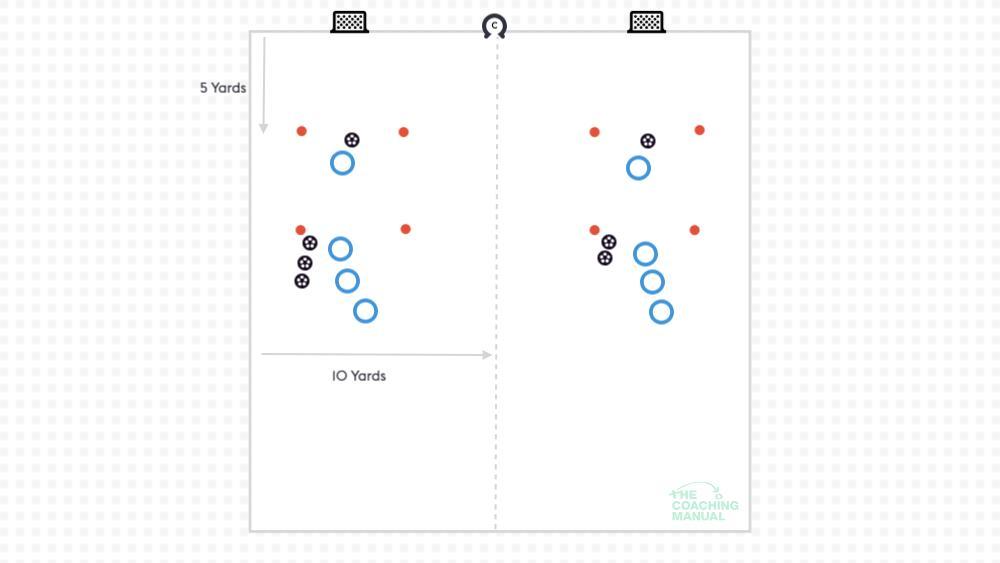
Diagram: Arrival game
Diagram from The Coaching Manual · By Steven Crane
Drill 1 · In the session plan

Arrival game

Children start playing the moment they arrive, so nobody stands around waiting.

  • 10 min
  • Area 25 x 15 (two pitches)
  • Up to 12 players
  • 6 bibs, 10 cones, 2 balls

How it works

  1. Mark out small pitches, roughly 15 x 10 each.
  2. As each child arrives they grab a bib and join in.
  3. It starts as 1v1 and grows as more children turn up.

Coaching points

  • Just play. No coaching yet. Let them get touches while you greet parents and finish setting up.
Open the full session with animation in TCM

Diagram: Spider bib game
Diagram from The Coaching Manual · By Lee Fletcher
Drill 2 · In the session plan

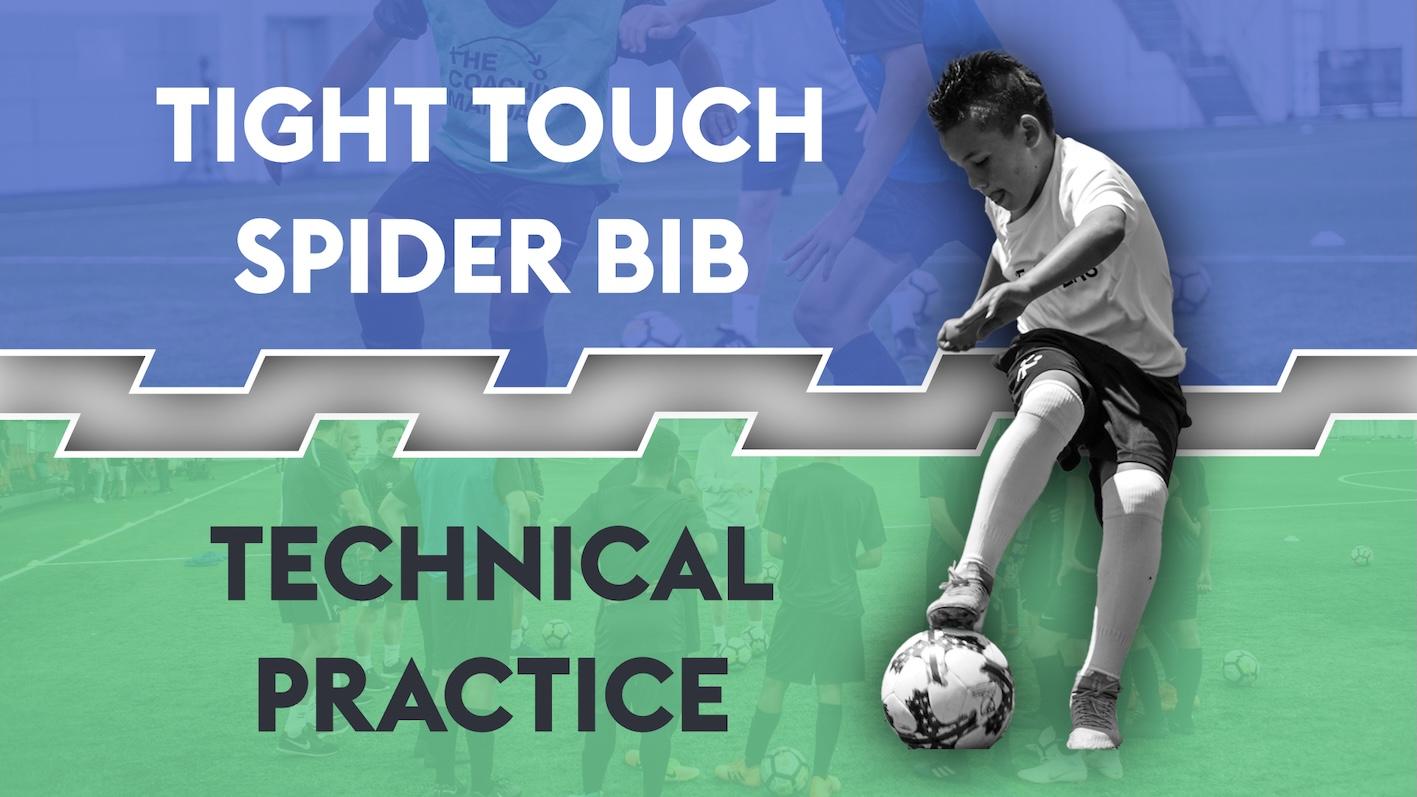
Spider bib game

A tag game with a ball each. The spiders try to land a bib on a ball, so everyone keeps twisting, turning and keeping the ball close.

  • 10 min (in short rounds)
  • A small square marked with 4 cones
  • Whole group
  • A ball each, 2 bibs, 4 cones

How it works

  1. Two children are spiders and hold a bib. Everyone else has a ball.
  2. The spiders throw their bib to try to land it on top of someone’s ball.
  3. If a bib lands on a ball, they swap: the spider takes the ball and the other child becomes a spider. Dribbling out of the square while being chased also means a swap.

Coaching points

  • Tight touches. Keep the ball close so it’s hard to hit.
  • Twist and turn. Change direction to get away from the spider.
  • Timing. Move the ball just as the bib is thrown.

Open the full session with animation in TCM

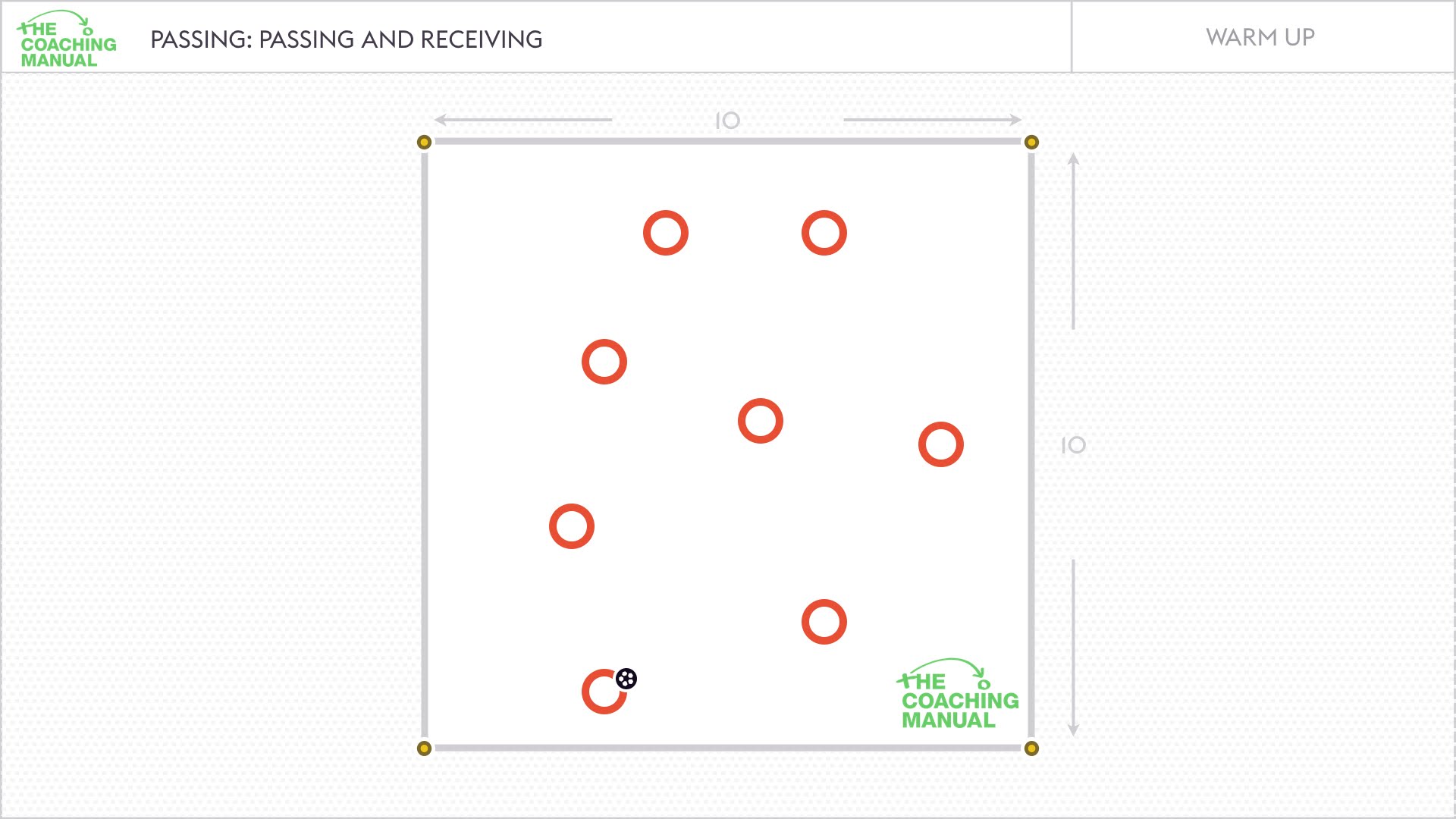
Diagram: Shooting challenge
Diagram from The Coaching Manual
Drill 3 · In the session plan

Shooting challenge

As many shots as possible as a team. Lots of strikes, lots of goals and a score to beat.

  • 10 min (20 in the full session)
  • Area 10 x 10, with a goal
  • 8 players
  • A ball each, 4 cones, goals

How it works

  1. Each child puts their ball inside the cones and has a shot. Use more goals if you have more players.
  2. After shooting, they collect their ball and dribble back to the line.
  3. Count how many shots the team takes in two or three minutes, then try to beat it.

Coaching points

  • Laces. Strike with the top of the foot.
  • Aim. Look at the goal before you shoot.
  • Power. Once they can hit the target, hit it harder.
Make it easier

Make it easier

  • Let children shoot from closer to the goal.

Open the full session with animation in TCM

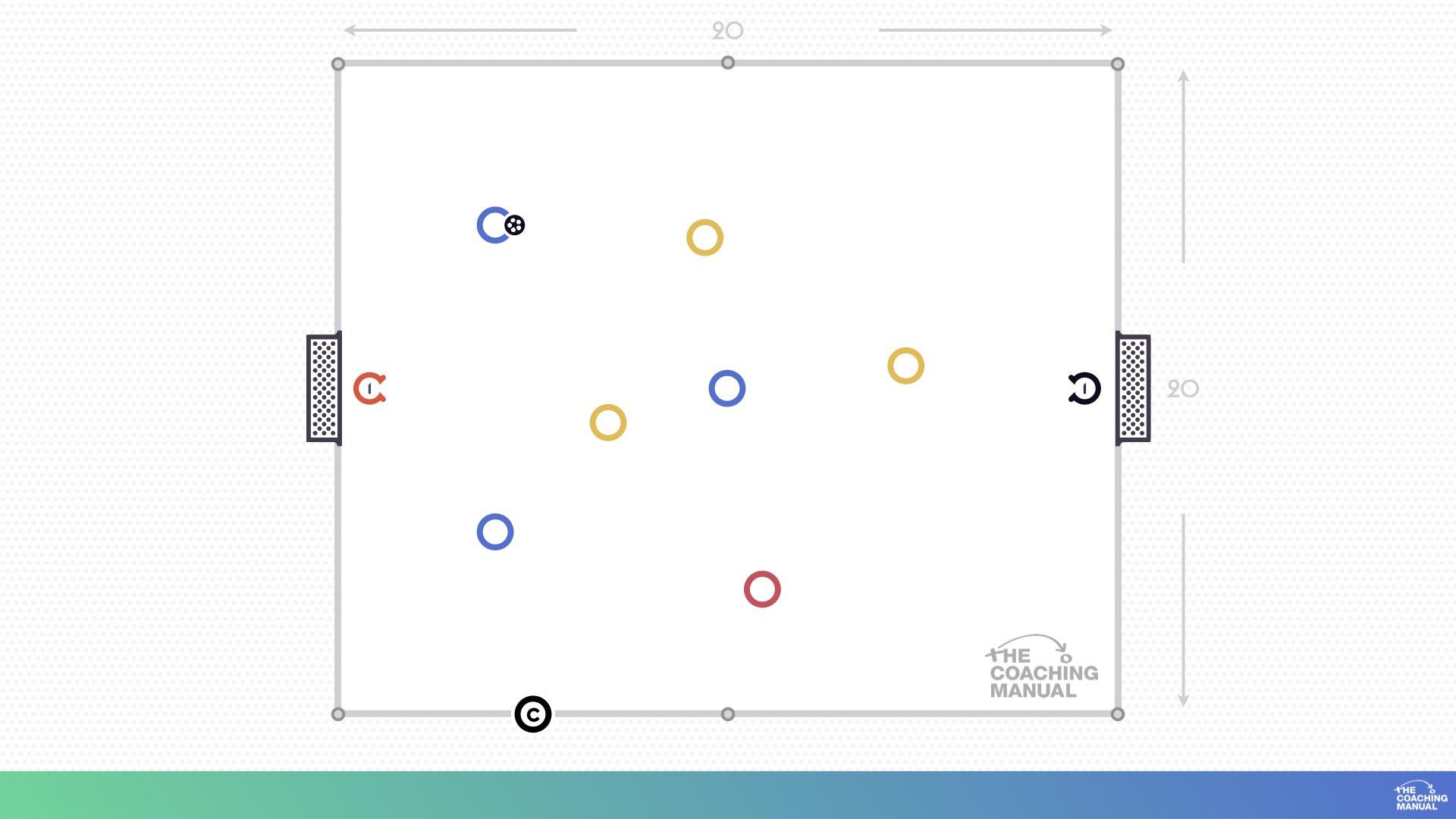
Diagram: Small games
Diagram from The Coaching Manual · By James Baxter
Drill 4 · In the session plan

Small games

The best bit. A short game where every child gets the ball and the chance to score.

  • 15 min
  • Area 20 x 20
  • Up to 10 players
  • Small goals, bibs, 4 balls

How it works

  1. Pick even teams, or give one team an extra player and swap it round if the game gets one-sided.
  2. With a bigger group, run two small games side by side so nobody is waiting.
  3. Keep spare balls by the goals so the game restarts quickly.

Coaching points

  • Let them play. Encourage, cheer and keep instructions to a minimum.
  • Praise bravery. Celebrate trying a skill, not just scoring.

Open the full session with animation in TCM

Diagram: Ball mastery footwork
Diagram from The Coaching Manual · By Anthony Curran
Drill 5

Ball mastery footwork

Dribbling through a field of cones with lots of little touches and quick changes of direction, so children have to keep looking up.

  • 5 min per round
  • Area 10 x 10
  • Whole group
  • A ball each, 20 cones

How it works

  1. Scatter cones around the area.
  2. Everyone dribbles through the space, avoiding the cones and each other with small touches and quick turns.
  3. Change the challenge each round: insides only, one foot for 30 seconds then the other, or insides, outsides and soles.

Coaching points

  • Different parts of the foot. Inside, outside and sole.
  • Both feet. Every challenge, both feet.
  • Head up. Look up between touches to avoid the cones and each other.

Open the full session with animation in TCM

Diagram: Tag and pass
Diagram from The Coaching Manual · By James Baxter
Drill 6

Tag and pass

Starts as a partner tag game for agility, balance and coordination, then adds a ball for first passes.

  • 10 min
  • Area 10 x 10
  • 8 players
  • 2 balls, 4 cones

How it works

  1. Players work in pairs and play tag. Tag your partner for a point, then swap roles.
  2. Then add a ball: players receive, pass, run around a cone and come back in to receive again.

Coaching points

  • Agility and balance. Quick feet, low body, stay on your toes.
  • Change direction. Dodge and dart to escape your partner.
  • Weight of pass. Gentle enough for your partner to stop.

Open the full session with animation in TCM

Common question

What do you do with 4 and 5-year-olds at football?

At this age, football should feel like playtime that happens to have a ball in it. If they go home happy and want to come back, the session worked.

  1. A ball each. Most of the session should be every child with their own ball. Sharing comes later.
  2. Games, not drills. Tag, races and challenges teach the same skills and keep them smiling.
  3. Use their imagination. Spiders, dragons, treasure: a story makes the rules easy to remember.
  4. Seconds, not minutes. Explain in a sentence, show it once, then let them play.
  5. Everyone scores. Small goals, short games and lots of goals. Success builds confidence.
  6. Expect chaos. Some will wander off, sit down or cry. It’s normal. Keep it light and keep it moving.

Questions coaches ask

What should I do with 4 and 5-year-olds at football?

Play games, not drills. Give every child a ball, keep explanations to a few seconds, use imagination games like spiders and treasure, and finish with small games where everyone scores. The 45-minute session on this page shows how.

How long should a U5 football session be?

About 45 minutes, with short activities and plenty of breaks.

Do U5s play matches?

Not in England: U5 football is play-based games. In the US, small games of 3v3 or 4v4 are common.

Should 4 and 5-year-olds play positions?

No. At this age it's about touches, fun and confidence. Positions mean nothing to them yet.

I've never coached before. Where do I start?

Run the session on this page as it is. Our volunteer coach guide covers the rest.

Other ages

Drills for every age

Pick an age to see its drills and session plan, or read what to expect at each age.

A season plan for every age

The Coaching Manual has 2,000+ full sessions with video, and ready-made season plans for every age group. Start free as a coach, or give every coach at your club the same plan.