Home / Age groups / U15

Under 15s · football (soccer) drills

U15 football drills: how to coach pressing

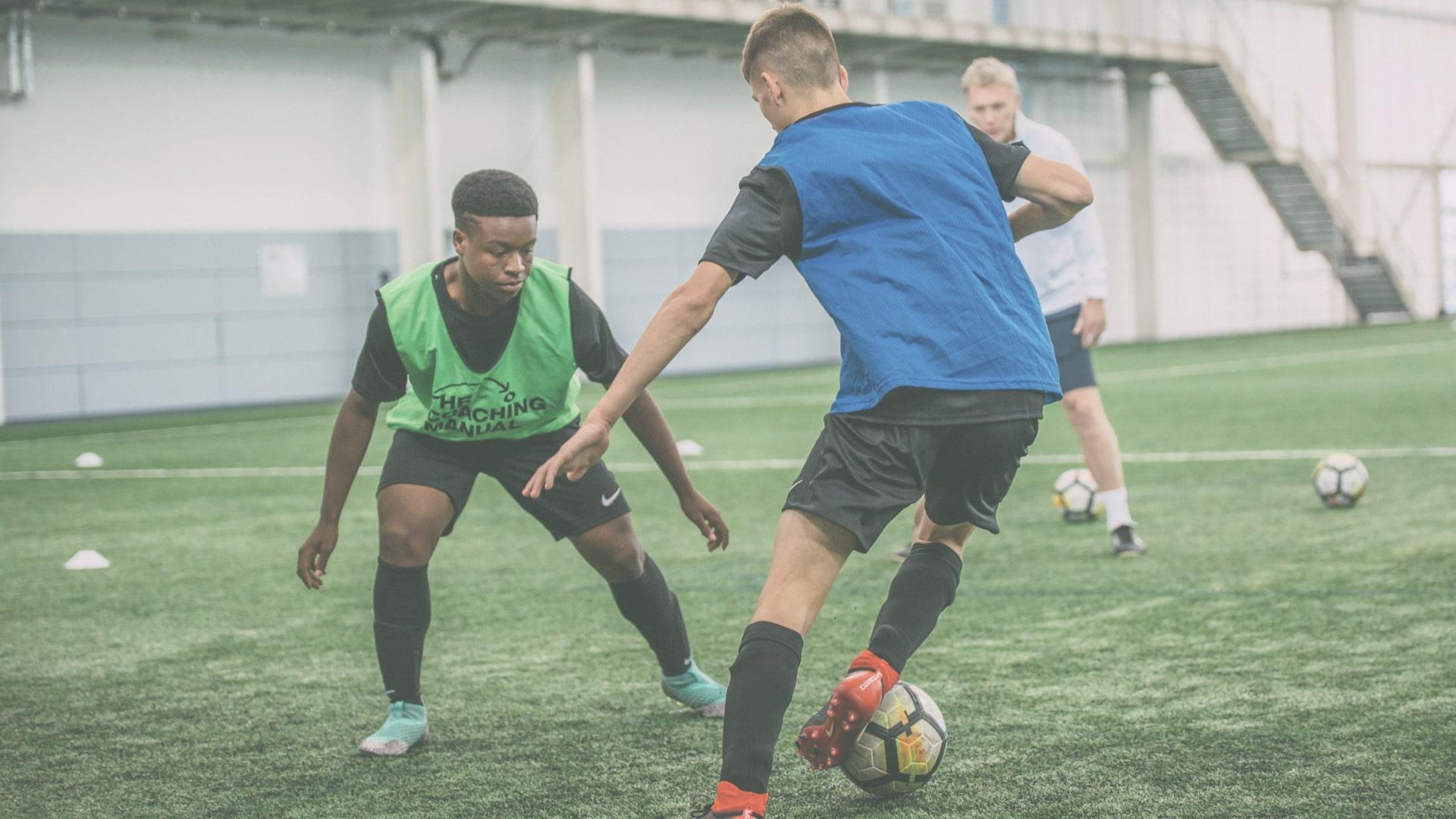
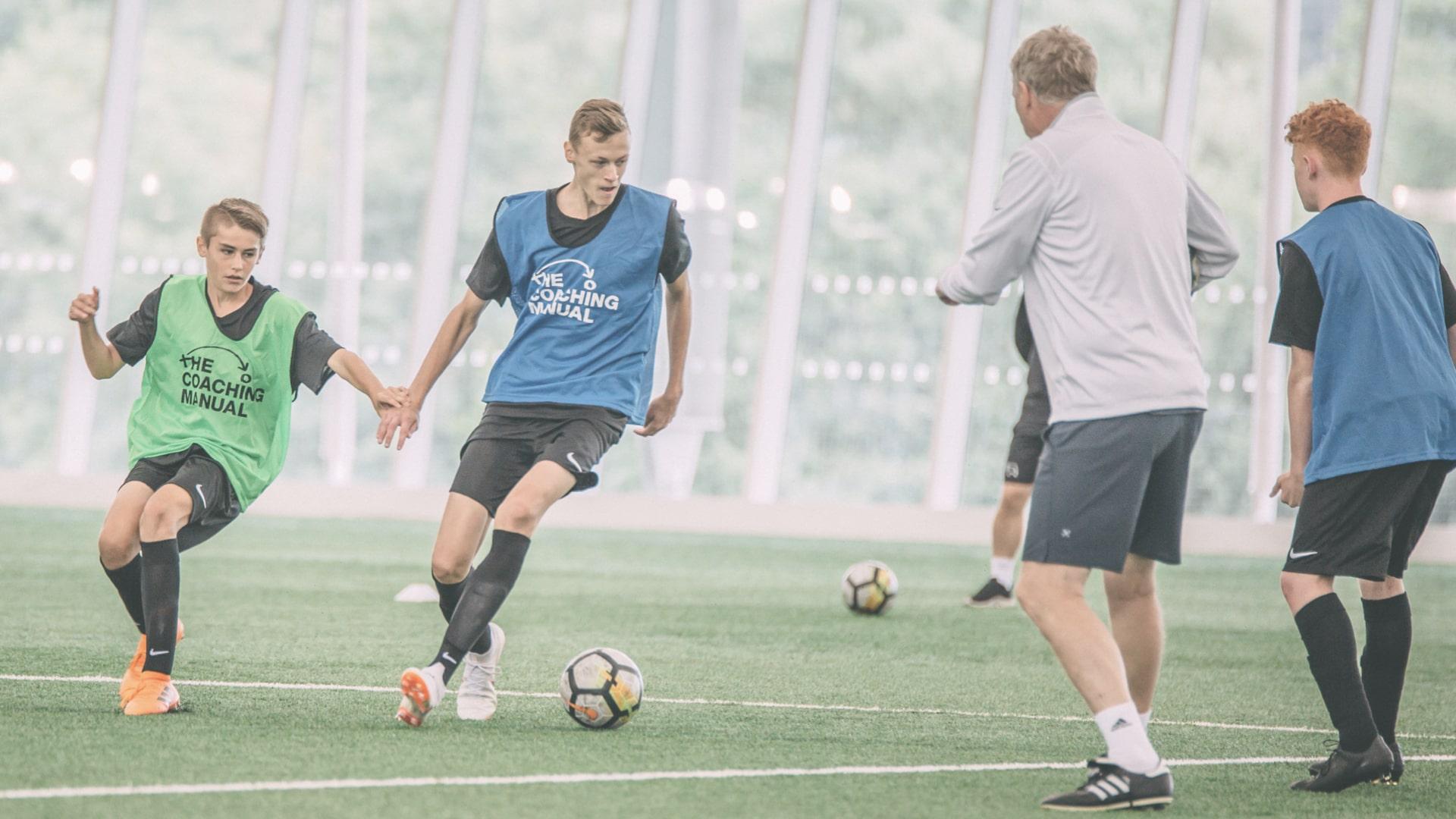
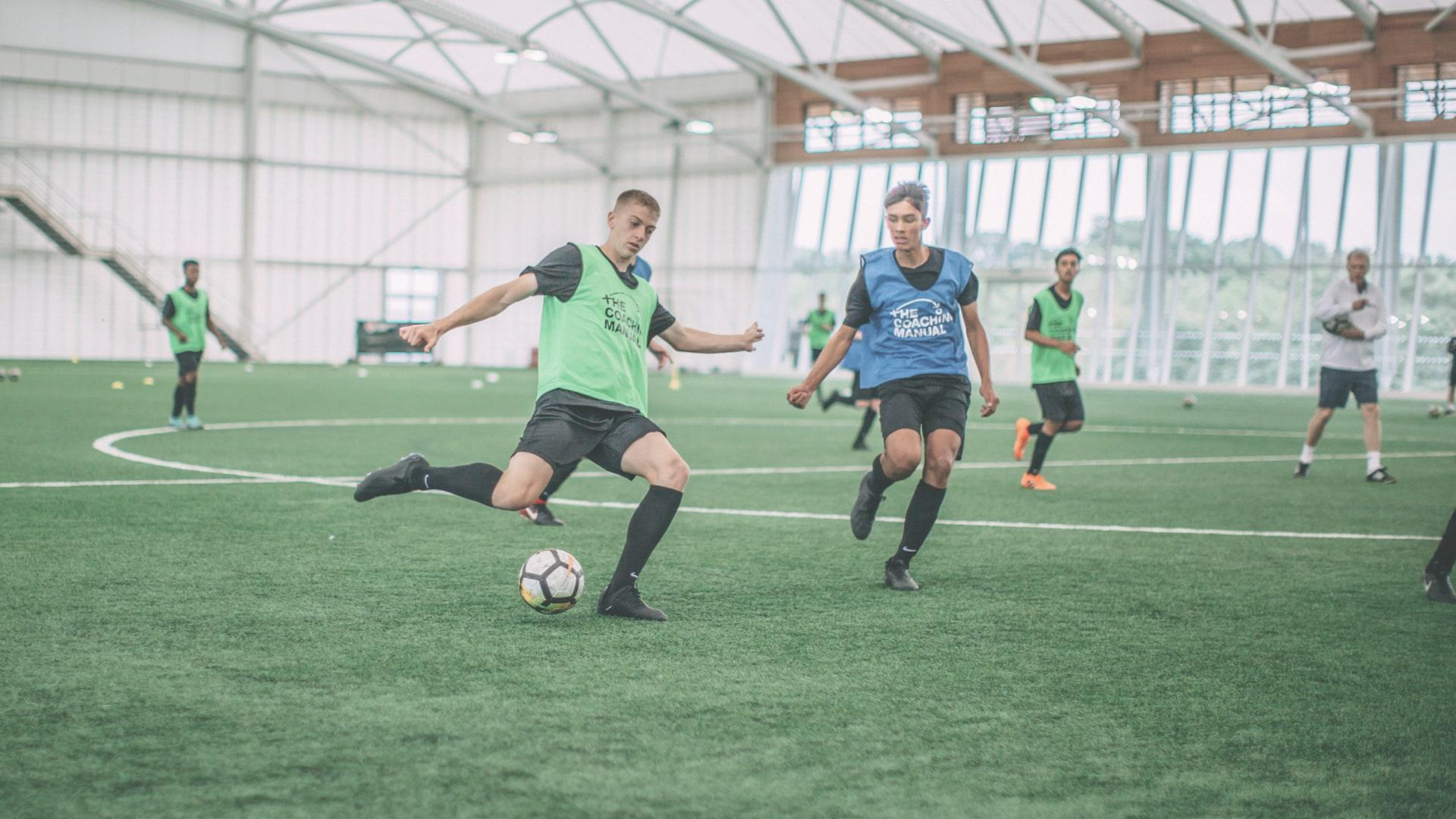
By U15, players can learn to press as a team: when to go, how to show the opponent one way, and when to drop back instead. The session below builds from a pressing warm-up to an 11v11 game that rewards winning the ball high up the pitch. Every drill has a diagram and coaching points.

  • 90minute sessions
  • 11v11England and US
  • 6drills with diagrams

U15 at a glance

  • England match format11v11.
  • US match format11v11.
  • Session length90 min
  • Coaching focusResults start to matter more to players. Development still comes first.
What to expect

What under 15s need

The FA’s four corners, with technical and tactical split. Players can now lead more of the problem solving themselves.

Technical

Position-specific detail and technique when tired. Players should own their own technical targets.

Tactical

Game plans, reading opponents and changing things during a match. Players increasingly lead the problem solving.

Physical

Strength and conditioning now earns its place, built on good movement. Recovery and load start to matter.

Psychological

Competition and results matter more to players. Resilience, handling mistakes and exam pressure all show up on the pitch.

Social

School, work and social life compete for time. Keeping the game enjoyable keeps them playing.

How coaching changes from U5 to U18 →

Session plan · about 90 minutes

A 90-minute pressing session

Built from two sessions in our U15–U16 season plan, Pressing in the Opposition Half and Transition to Defend. Allow 15 minutes for a physical warm-up and drinks breaks. You need cones, bibs, balls, mannequins or poles and two full-size goals. Open the pressing session in TCM.

Play: gamesPractice: one theme, lots of repetition

6 drills with diagrams

U15 drills

Every drill comes from our U15–U16 season plan on The Coaching Manual, where you’ll find the full session with an animation. Areas are in metres or yards: near enough is fine.

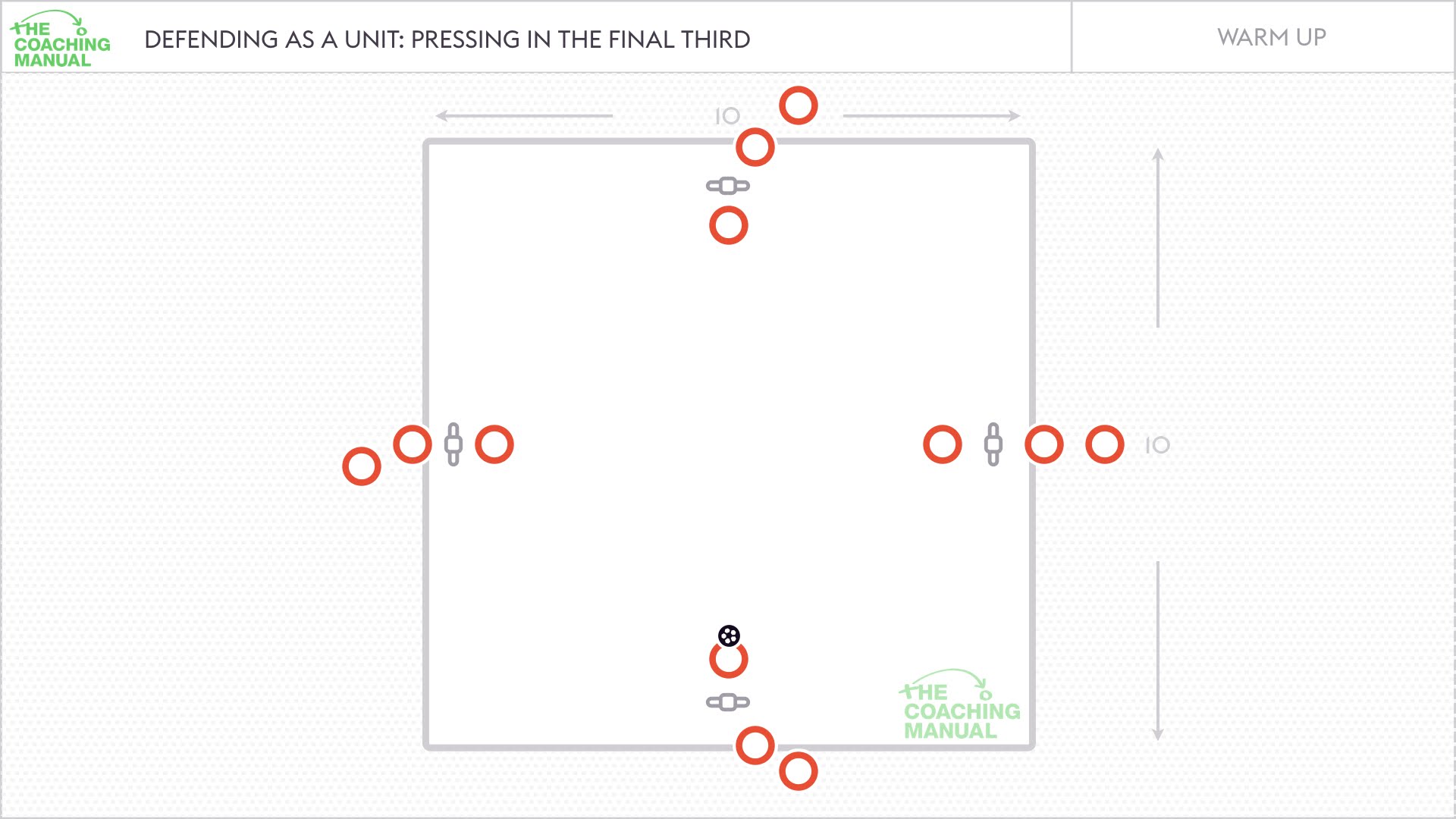
Diagram: Pressing warm-up
Diagram from The Coaching Manual · By Anthony Limbrick
Drill 1 · In the session plan

Pressing warm-up

Every receiver gets pressed, so players practise closing down and body shape from the first minute.

  • 10 min
  • Area 15 x 15
  • 12 players
  • 1 ball, 4 cones, 4 mannequins or poles

How it works

  1. Put a mannequin or pole on each corner, with three or four players at each.
  2. The player with the ball is pressed by a player from the opposite pole. They pass to the right and move to the left.
  3. Keep it going: the ball moves right, the passer moves left, and every receiver is pressed.

Coaching points

  • Move as the ball travels. Close down while the pass is on its way.
  • Body shape. Side-on and on your toes, ready to react.
  • Pressure the receiver. Get close enough to stop them turning.
  • Read the play. Know where the next pass is likely to go.
Make it harder

Make it harder

  • Change direction: pass left and move right.
  • The presser uses their shape to force the pass a certain way.
  • Passers choose whether to go left or right.
Open the full session with animation in TCM

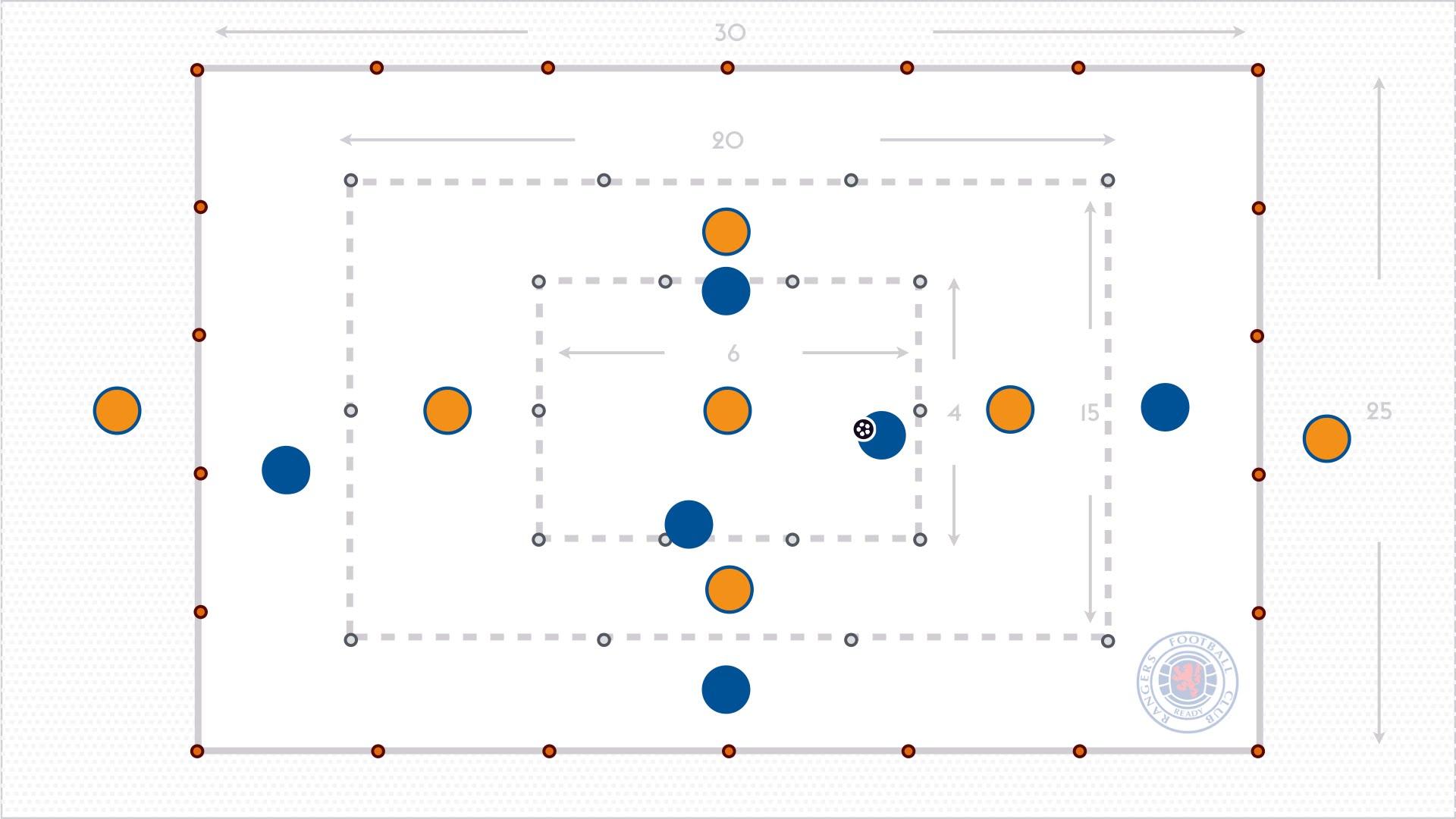
Diagram: Transition rondo
Diagram from The Coaching Manual
Drill 2 · In the session plan

Transition rondo

A rondo that grows every time the ball changes hands, so players learn to react the moment they lose it.

  • 15 min
  • Area 30 x 25, in three areas
  • 13 players
  • 1 ball, 7 bibs, 42 cones

How it works

  1. Start with 3v1 in the middle area.
  2. If the defender wins the ball, they pass to a teammate in the second area, and it becomes 5v3.
  3. Each time the ball is won it grows again, to 6v5 and then 7v6. If the ball goes out, start again with 3v1.

Coaching points

  • Attitude. Press straight away when you lose it.
  • Engage quickly. The nearest player goes first.
  • Angle of approach. Close down in a way that cuts off a pass.

Open the full session with animation in TCM

Diagram: Press high, 11v10
Diagram from The Coaching Manual · By Paul Bright
Drill 3 · In the session plan

Press high, 11v10

The opposition has to play out from the back, and the pressing team scores more for winning it higher up.

  • 20 min
  • Area 65 x 55 (two-thirds of a pitch)
  • 21 players
  • 10 balls, 21 bibs, 6 cones, 2 goals

How it works

  1. Use two-thirds of a pitch with a goal and goalkeeper at each end. Mark the final and middle thirds.
  2. Play 11 attackers against 10 defenders. The attacking goalkeeper has to play out from the back and can’t kick or throw into the middle third.
  3. Defenders who win the ball in the final third and score get 3 points. Win it in the middle third and score: 1 point.

Coaching points

  • Triggers and traps. Press together when the trigger comes, and push play into an area you can win it.
  • Press and guide. Show the opponent where you want them to go.
  • Stop the turn. Get tight to players receiving with their back to goal.
  • Positioning. Stay close enough to support the press.
Make it easier or harder

Make it easier

  • Make the area smaller.

Make it harder

  • Add attackers to create overloads the defenders have to solve.
  • Add the last defender to make it 11v11.

Open the full session with animation in TCM

Diagram: Pressing game
Diagram from The Coaching Manual · By Paul Bright
Drill 4 · In the session plan

Pressing game

An 11v11 game where the place you win the ball changes what a goal is worth.

  • 30 min
  • Area 110 x 65 (full pitch), in thirds
  • 22 players
  • 1 ball, 11 bibs, 12 cones

How it works

  1. Play 11v11, or equal teams with the numbers you have, with normal rules. Split the pitch into thirds as reference points.
  2. One team scores more for winning it high: win it in the final third and score for 3 points, the middle third for 2, the defensive third for 1.
  3. The other team scores more for building from deep: start the attack in your defensive third and score for 3 points, the middle third for 2, the final third for 1.

Coaching points

  • Press as a unit. Go together or not at all.
  • Know the triggers. Recognise the moment to press.
  • Recover if beaten. If the press is broken, get back into shape quickly.

Open the full session with animation in TCM

Diagram: When to press, when to drop
Diagram from The Coaching Manual · By Lee Fletcher
Drill 5

When to press, when to drop

A game that rewards both winning the ball high and breaking forward quickly from deep, so players have to choose.

  • 25 min
  • Area 70 x 60
  • 22 players
  • 1 ball, 20 bibs, 24 cones

How it works

  1. Mark a halfway line as the start of the final third, plus two wide channels and a box in the other half.
  2. Normal game rules for both teams.
  3. Win the ball in your defensive half and cross halfway in fewer than four passes: one goal. Win it in the attacking half and score: an extra goal, so two in total.

Coaching points

  • Communicate. The team decides together whether to press or drop.
  • When to press. Close by, trigger on, teammates in support.
  • When to drop. Outnumbered or stretched: get back into shape.
  • Manage the opposition. Keep them in front of you.

Open the full session with animation in TCM

Diagram: Transition to defend 6v6
Diagram from The Coaching Manual · By Lee Fletcher
Drill 6

Transition to defend 6v6

Strikers wait in the end zones to finish first time, so defenders have to read danger the moment the ball turns over.

  • 20 min
  • Area 45 x 30
  • 12 players
  • 1 ball, 12 bibs, 20 cones, 2 goals

How it works

  1. Set up with two goals and an end zone at each end.
  2. At all times each team must have at least one player in the end zone as a striker.
  3. Teams score in the goal they’re attacking. Strikers in the end zones can score with one touch when they receive.

Coaching points

  • Read the danger. Spot the striker before the pass is played.
  • Slide and screen. Shift across to block the pass into the striker.
  • Track the runners. Don’t let them arrive unmarked.
Make it easier

Make it easier

  • No passes over the top of the defenders.

Open the full session with animation in TCM

Common question

How do you coach pressing?

Pressing isn’t one player chasing the ball. It’s the whole team moving together so that when the ball is won, it’s won high up the pitch with teammates close by.

  1. Press as a team. One player goes to the ball. The players around them cut off the nearest passes.
  2. Know the triggers. A poor touch, a back pass, a player receiving facing their own goal, or a pass out to the touchline.
  3. Angle of approach. Curve the run to show the opponent one way, towards the touchline or into a teammate.
  4. Sprint, then slow. Close the space quickly, then slow down so you stay on your feet and don’t get beaten.
  5. Press or drop. If the ball can be played forward easily, or the team is too spread out, drop back into shape instead.
  6. React when you lose it. The first few seconds after losing the ball are often the best time to win it back.

Questions coaches ask

How do I coach pressing in football?

Teach it as a team job: one player presses the ball while teammates cut off the nearest passes. Coach the triggers to press, the angle of approach that shows the opponent one way, and when to stop pressing and drop back into shape. The session on this page builds that step by step.

When should a team press and when should it drop?

Press when there is a trigger and teammates are close enough to support, such as a poor touch, a back pass or a player receiving facing their own goal. Drop when the ball can be played forward easily or the team is too spread out to press together.

What format do U15s play?

11v11 in both England and the US.

How long should a U15 training session be?

About 90 minutes, including a warm-up, with most of the time in game-like practices.

Other ages

Drills for every age

Pick an age to see its drills and session plan, or read what to expect at each age.

A season plan for every age

The Coaching Manual has 2,000+ full sessions with video, and ready-made season plans for every age group. Start free as a coach, or give every coach at your club the same plan.